The Ultimate Showdown: Digital Planners vs Traditional Paper Planners
The quest for an organised life is a perpetual human endeavour, a constant negotiation between chaos and control. In this modern age, this pursuit has manifested in a fascinating dichotomy: the sleek, feature-rich digital planner pitted against the tactile, familiar charm of its traditional paper counterpart. This is not merely a preference; it’s a battle for the most efficient and effective way to manage our ever-expanding to-do lists, appointments, and aspirations. The landscape of personal organisation has become a battleground, and the weapons of choice are pixels and paper.
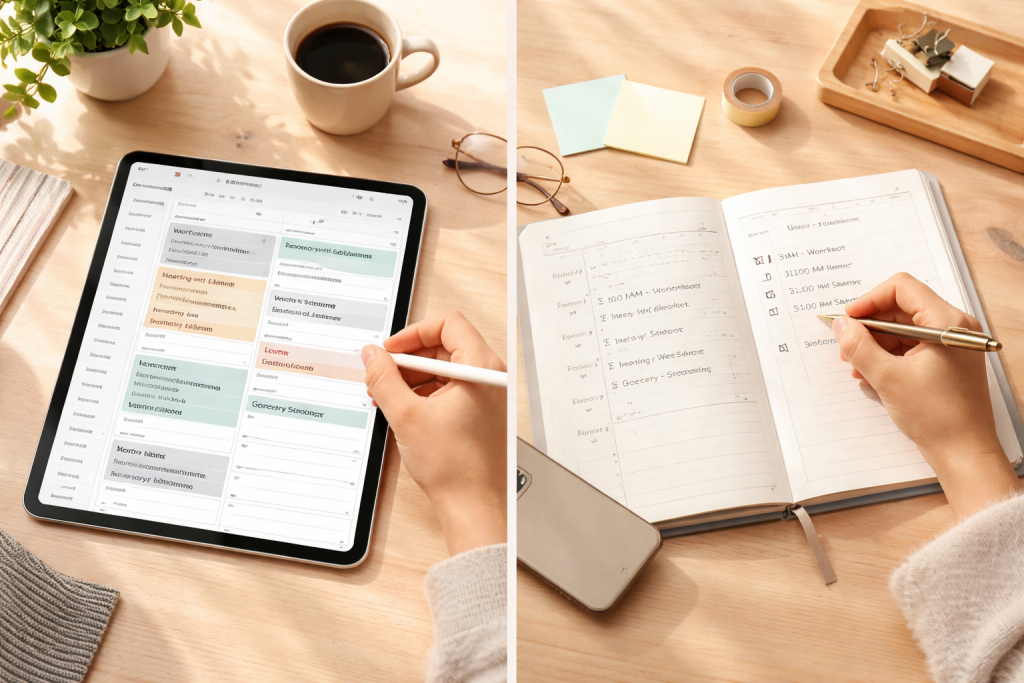
Digital planners have exploded in popularity, driven by the ubiquitous nature of smartphones, tablets, and computers. Their appeal lies in their inherent technological advantages, offering a dynamic and interactive approach to planning.
Contents
- 1 Seamless Integration and Synchronization
- 2 Advanced Features and Functionality
- 3 Space-Saving and Eco-Friendly Potential
- 4 The Power of Tactile Engagement and Memory Retention
- 5 Simplicity and Freedom from Distractions
- 6 Aesthetical Appeal and Personal Expression
- 7 Digital Flexibility: Templates, Widgets, and Interactivity
- 8 Paper Canvas: Stickers, Stamps, and Artistic Flair
- 9 Anytime, Anywhere Access: The Digital Advantage
- 10 The Tangible Presence and Instant Recall of Paper
- 11 Enhancing Efficiency with Digital Tools
- 12 The Empowering Nature of Digital Connectivity
- 13 Identifying Your Planning Style and Priorities
- 14 Experimentation and Hybrid Approaches
Seamless Integration and Synchronization
One of the most compelling benefits of digital planners is their ability to seamlessly integrate with other digital tools. You can sync your calendar app with your email to automatically add new appointments. Your to-do list application can connect with project management software, ensuring that tasks from work are visible alongside personal commitments. This interconnectedness eliminates the tedious process of manually transferring information or checking multiple sources. Furthermore, cloud synchronisation organisation ensures that your planner is accessible from any device, anywhere. Whether you’re at your desk, on the subway, or on vacation, your schedule is always at your fingertips, updated in real time. synchronisation This constant accessibility eradicates the risk of forgetting important information because you left your physical planner at home.
Advanced Features and Functionality
Digital planners often boast a plethora of advanced features that go far beyond simple date and task tracking. Hyperlinking allows you to connect related notes, documents, or even web pages directly within your planner. This creates a rich, interconnected web of information, making it easy to access supporting materials for meetings or projects. Many digital planners also offer robust search functionalities, allowing you to find specific entries, tasks, or notes in seconds, a process that would involve flipping through numerous pages in a paper planner. Recurring events can be set up with ease, eliminating the need to repeatedly write down the same appointments. Digital planners can also incorporate reminders, notifications, and even goal-setting frameworks, providing proactive prompts to keep you on track. Some advanced platforms allow for the creation of custom templates, dashboards, and even habit trackers, offering a level of sophistication that is difficult to replicate on paper.
Space-Saving and Eco-Friendly Potential
The environmental impact of paper consumption is a growing concern, and digital planners offer a compelling alternative. By eliminating the need for paper, notebooks, and sticky notes, digital planning can contribute to a more sustainable lifestyle. This advantage also translates to immense space-saving benefits. Instead of stacks of binders or overflowing desk drawers, all your planning needs are consolidated into a single digital device. This declutters not only your physical space but also your mental space, reducing visual distractions and promoting a sense of calm and order. The ability to archive old plans and documents digitally also means that you no longer need to dedicate physical storage to past commitments, further contributing to a minimalist and organised real time. environment.
Despite the undeniable allure of technology, the traditional paper planner continues to hold its ground, cherished by many for its distinctly human and tangible qualities.
The Power of Tactile Engagement and Memory Retention
There’s a powerful psychological connection to the act of physically writing. The stroke of a pen on paper engages different parts of the brain than typing or tapping on a screen. Studies suggest that the kinaesthetic-organised act of writing can enhance memory retention and comprehension. The act of physically jotting down an appointment or a to-do item creates a deeper imprint in our minds, making us more likely to remember it. This tactile engagement also provides a welcome respite from the constant glow of screens, offering a screen-free zone for focused thought. The physical presence of a paper planner on your desk or in your bag serves as a constant, tangible reminder of your commitments, keeping them top of mind in a way that a notification on a device sometimes fails to achieve.
Simplicity and Freedom from Distractions
In a world saturated with digital interruptions, a paper planner offers a sanctuary of focus. There are no tempting notifications popping up, no urge to check social media, and no endless scroll of unrelated information. The simplicity of a paper planner allows for a singular focus on the task at hand: planning your life. This absence of digital distractions can lead to deeper concentration and more mindful decision-making. The act of putting pen to paper encourages a deliberate and thoughtful approach to scheduling, allowing for a more intuitive and less rushed planning process. This simplicity can be incredibly liberating, especially for those who find themselves easily sidetracked by the digital world.
Aesthetical Appeal and Personal Expression
For many, a paper planner is more than just a tool; it’s a canvas for personal expression. The choice of planner, the type of pen, and the kinaesthetic decorative stickers, washi tape, and doodles all contribute to a unique aesthetic that reflects the individual’s personality and style. This creative outlet can be a source of joy and motivation. The satisfaction of a beautifully laid-out weekly spread or a meticulously colour-coded pen and month can be incredibly rewarding. Unlike the often uniform appearance of digital interfaces, paper planners offer an endless array of customisation colour-coded through a multitude of physical design choices, allowing for a deeply personal connection to the planning process.
The ability to tailor a planner to individual needs and preferences is crucial for its effectiveness. Both digital and paper planners offer avenues for customisation, albeit through different means.
Digital Flexibility: Templates, Widgets, and Interactivity
Digital planners excel in their virtual flexibility. Many platforms offer a vast library of pre-designed templates for various planning styles, from daily to-do lists and weekly schedules to monthly overviews and goal-setting pages. Beyond templates, users can often add custom widgets, such as weather forecasts, motivational quotes, or even links to specific websites or files. The interactive nature of digital planners allows for easy editing, rearranging, and duplication of entries, providing a fluid and adaptable planning experience. Users can create custom categories, tags, and colour-coding systems to organise their information precisely as they see fit. Some advanced software even allows for the creation of completely bespoke layouts, giving users unparalleled control over their digital planning environment.
Paper Canvas: Stickers, Stamps, and Artistic Flair
Traditional paper planners offer a different kind of personalisation, one that is rooted in the physical and the artistic. The sheer variety of stickers, stamps, washi tape, and stencils available allows for an incredibly rich and visually engaging customisation experience. Users can create unique dashboards, decorate their weekly spreads with themed artwork, and add handmade embellishments. The process of planning can become an artistic endeavour, transforming mundane tasks into creative projects. This hands-on approach allows for a deeply personal and enjoyable interaction with one’s planner, making the act of planning itself a form of self-expression and stress relief.
The ease with which we can access and use our planners significantly impacts their effectiveness on a day-to-day basis.
Anytime, Anywhere Access: The Digital Advantage
The primary advantage of digital planners in terms of accessibility and convenience lies in their omnipresence. As long as you have a connected device, your planner is with you. This means no more frantic searches for a misplaced notebook before a meeting or the disappointment of realising you forgot to pack your planner on a trip. Cloud synchronisation ensures that updates made on one device are reflected on all others, providing a consistent and up-to-date view of your schedule. This level of instant access is unparalleled and caters to the demands of a mobile and connected lifestyle. The ability to quickly add an appointment or jot down a reminder on the go, without needing to carry a physical item, is a significant convenience for many.
The Tangible Presence and Instant Recall of Paper
While digital planners boast remote accessibility, paper planners offer a different kind of immediate convenience: physical presence. A paper planner is always where you left it, and its physical form makes it instantly visible and accessible at a glance. There’s no need to unlock a device, navigate through apps, or worry about battery life. For quick checks of daily tasks or upcoming appointments, a glance at a physical planner can be faster and more direct than its digital counterpart. The tactile nature also means that you don’t have to rely on technology to access your plans, making it an ideal option for those who prefer a distraction-free planning experience or who find themselves in situations where digital access is limited.
Technology has fundamentally reshaped how we approach planning and organisation, offering tools that were once unimaginable.
Enhancing Efficiency with Digital Tools
The integration of technology has led to unprecedented levels of efficiency in planning. From automated reminders and recurring event scheduling to the ability to attach files and create interactive checklists, digital planning tools streamline numerous tasks. Project management software, when integrated with personal planners, can break down complex projects into manageable steps, assigning deadlines and tracking progress automatically. The advancements in artificial intelligence are also beginning to play a role, with some platforms offering suggestions for scheduling, time blocking, and even task prioritisation. This allows individuals to delegate some of the cognitive load of planning to technology, freeing up mental energy for more creative and strategic thinking.
The Empowering Nature of Digital Connectivity
Beyond simple task management, technology empowers individuals to connect their planning to broader goals and aspirations. Online collaboration tools allow teams to plan and execute projects together seamlessly. The vast resources available online, from educational articles to motivational podcasts, can be directly linked to planning entries, fostering continuous learning and personal growth. The ability to visualise progress through digital dashboards and analytics provides powerful feedback loops, motivating users to stay on track and achieve their objectives. The interconnectedness offered by technology allows for a holistic approach to planning, encompassing not just daily tasks but also long-term ambitions and collaborative endeavours.
Ultimately, the decision between a digital and a traditional paper planner is a deeply personal one, dependent on individual needs, preferences, and lifestyle.
Identifying Your Planning Style and Priorities
Reflect on how you naturally approach tasks and information. Do you thrive on the visual and tactile satisfaction of writing things down, or do you prefer the efficiency and interconnectedness of digital tools? Think about your work environment: do you spend most of your time at a desk or on the go? Think about the types of information you need to manage. If you deal with a lot of complex projects with interconnected documents, a digital planner might offer superior functionality. If your planning is more straightforward, focusing on daily appointments and tasks, a paper planner might be perfectly adequate and more enjoyable. Prioritise what aspects of planning are most important to you: speed, visual appeal, memorability, or seamless integration.
Experimentation and Hybrid Approaches
The modern planning landscape is beautiful because you don’t have to choose one or the other. Many people find that a hybrid approach offers the best of both worlds. You might use a digital planner for overarching schedules, appointments, and email integration, while using a physical notebook for brainstorming, creative thinking, or detailed daily task lists. Experiment with different apps and different types of paper planners to see what resonates with you. Try a minimalist digital calendar for a week, then switch to a bullet journal. Sometimes, the best way to discover your ideal planning system is through hands-on exploration, allowing you to understand firsthand the strengths and weaknesses of each approach in your own life. The ultimate goal is not to pick the “best” planner but rather the planner that best empowers you to achieve your organisational goals and live a more fulfilling life.

At DayMentra.com, our mission is simple: to help individuals improve their daily productivity, build better habits, and develop a growth-oriented mindset through practical and easy-to-follow strategies.