
Embracing Change: A Beginner’s Guide to Adopting a Growth Mindset
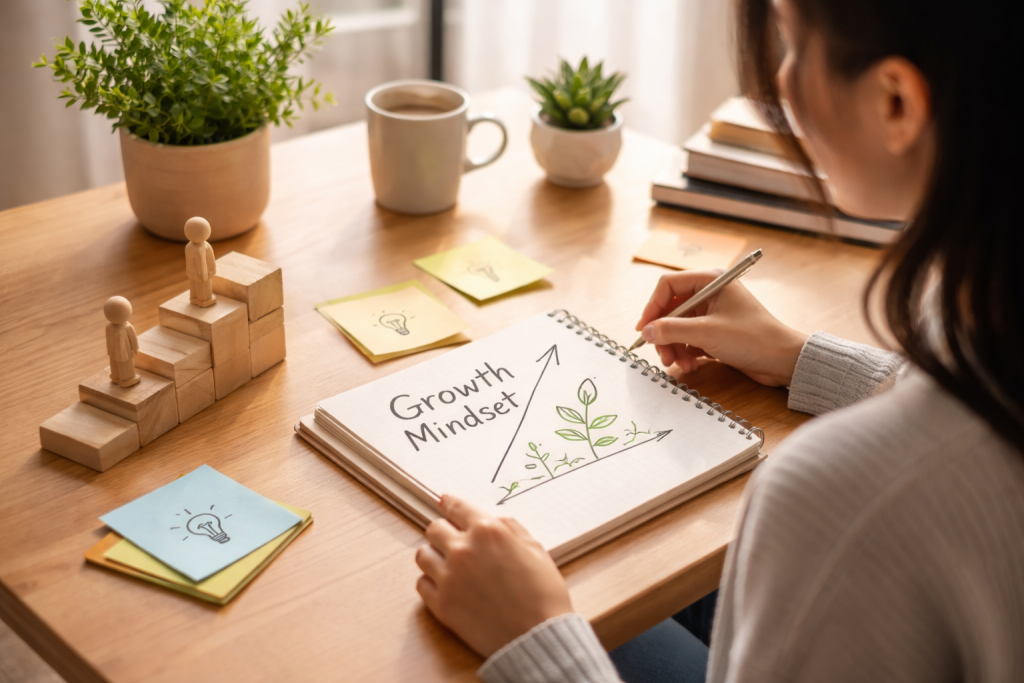
The world around us is in constant flux. Technological advancements and shifting social norms are examples of the undeniable force of change. Yet, for many, the prospect of change can be unsettling, even terrifying. This reluctance often stems from a fixed mindset, a belief that abilities and intelligence are static and unchangeable. However, adopting a growth mindset – the understanding that our capabilities can be developed through dedication and hard work – unlocks a powerful potential for personal and professional evolution. This guide will illuminate the path to cultivating a growth mindset, offering practical strategies to navigate the ever-evolving landscape of life with courage and optimism.
Contents
- 1 Understanding the Growth Mindset
- 2 Overcoming Fear of Change
- 3 Developing Resilience in the Face of Challenges
- 4 Cultivating a Positive Attitude Towards Learning and Growth
- 5 Embracing Failure as a Learning Opportunity
- 6 Setting Realistic Goals for Personal and Professional Growth
- 7 Surrounding Yourself with Supportive and Growth-Oriented Individuals
Understanding the Growth Mindset
At its core, a growth mindset is a fundamental belief system that views intelligence and talents not as fixed traits but as malleable qualities that can be cultivated and strengthened through effort. It contrasts sharply with a fixed mindset, which posits that our inherent abilities are predetermined and largely unchangeable. Individuals with a fixed mindset tend to shy away from challenges, fearing failure as an indictment of their inherent limitations. They may interpret setbacks as definitive proof of their inadequacy, leading to feelings of helplessness and resignation.
Conversely, those with a growth mindset perceive challenges as opportunities for learning and development. They understand that mistakes are an integral part of the learning process, not indicators of a lack of ability. This fundamental difference in perspective completely alters one’s approach to life, fostering a profound sense of agency and an eagerness to confront new experiences. It’s about recognising that the brain is like a muscle; the more it is exercised and stimulated, the stronger and more capable it becomes.
The Brain’s Malleability
Modern neuroscience has provided compelling evidence to support the principles of a growth mindset. Research into brain plasticity has demonstrated that the brain is not a static organ but rather a dynamic and adaptable system that can reorganise itself by forming new neural connections throughout life. This inherent capacity for change, known as neuroplasticity, means that we are quite literally capable of rewiring our brains. Every new skill learned and every new piece of information processed strengthens existing neural pathways and creates new ones, effectively enhancing our cognitive abilities. This scientific understanding serves as a powerful foundation for the belief that we can indeed grow and improve.
Internal Dialogue and Self-Perception
Our internal dialogue has a major impact on our mindset. The way we speak to ourselves in moments of triumph and, more importantly, in moments of difficulty, profoundly impacts our self-perception and our willingness to embrace challenges. A fixed mindset often manifests in critical self-talk, filled with statements like “I’m not good enough” or “I’ll never learn this.” A growth mindset, on the other hand, encourages a more compassionate and constructive internal narrative. It emphasises phrases like “I can learn this” or “What can I do differently next time?” Cultivating this positive internal dialogue is an essential step toward fostering a resilient and adaptable outlook.
Overcoming Fear of Change
Fear of change is a primal human instinct, often rooted in our innate desire for safety and predictability. The unknown can feel threatening, disrupting our sense of control and pushing us outside our comfort zones. However, allowing this fear to dictate our choices can stifle personal growth and prevent us from realising our full potential. Learning to confront and overcome this fear is a pivotal step towards embracing a growth mindset.
Identifying the Source of Fear
The first step in conquering the fear of change is to understand its origins. Is it a fear of failure, a fear of judgement from others, or perhaps a fear of losing something familiar and comfortable? Taking the time to introspect and specifically identify what aspects of change evoke anxiety can empower us to address those concerns more directly. Often, the fear is not of the change itself but of the perceived negative consequences that might follow. By dissecting these perceived threats, we can begin to challenge their validity and develop strategies to mitigate potential risks.
Gradual Exposure and Small Steps
Overcoming significant fear rarely happens overnight. A more effective approach involves gradual exposure to change, taking small, manageable steps that incrementally expand our comfort zone. This could involve trying a new hobby, learning a new online tool, or initiating a conversation with someone new. Each successful smaller step builds confidence and provides tangible evidence that we are capable of adapting and thriving in new situations. This incremental approach disarms the overwhelming feeling that often accompanies the thought of sweeping changes.
Re-framing Change as Opportunity
A fundamental shift in perspective is key to overcoming the fear of change. Instead of viewing change as a threat to be avoided, learn to reframe it as an opportunity for growth, innovation, and new experiences. Every change, even those initially perceived as negative, carries the potential for valuable lessons and unforeseen benefits. By actively searching for the positive aspects of change, we can begin to associate it with excitement and progress rather than dread. This reframing is a conscious effort that, with practice, becomes a natural way of thinking.
Developing Resilience in the Face of Challenges
Life is inherently filled with challenges, setbacks, and moments of adversity. While a fixed mindset might lead to discouragement and abandonment, a growth mindset empowers us to develop resilience – the ability to bounce back from difficult experiences and adapt to new circumstances. Resilience is not the absence of struggle, but rather the capacity to navigate and recover from it, emerging stronger and wiser.
Learning from Setbacks
In a fixed mindset, setbacks are often interpreted as personal failures, leading to shame and a desire to give up. A growth mindset, however, views setbacks as invaluable learning opportunities. Instead of dwelling on what went wrong, resilient individuals analyse the situation, identify areas for improvement, and adjust their approach for future endeavours. This analytical, problem-solving orientation transforms obstacles into stepping stones on the path to mastery. This reflection is crucial; it converts a negative experience into an insightful guide for future actions.
Cultivating Self-Compassion
Developing resilience also involves cultivating self-compassion. When faced with challenges, it’s easy to fall into a trap of self-criticism and harsh judgement. Practising self-compassion means treating ourselves with the same kindness and understanding we would offer a close friend. It involves acknowledging our imperfections, recognising that struggle is a universal human experience, and offering ourselves empathy rather than condemnation. This kind and nurturing internal voice strengthens our emotional fortitude and allows us to persevere through difficulties with greater ease.
Cultivating a Positive Attitude Towards Learning and Growth
A positive attitude toward learning is a cornerstone of the growth mindset. It’s not simply about being optimistic but about actively seeking out knowledge, embracing new information, and maintaining a lifelong curiosity. This eagerness to learn fuels personal and professional development, ensuring that we never stagnate but instead continuously evolve.
Embracing Intellectual Curiosity
A positive attitude towards learning is ignited by intellectual curiosity. This involves questioning, exploring, and actively seeking out new information and perspectives. It means being open to ideas that challenge our existing beliefs and being willing to delve into unfamiliar subjects. Cultivating intellectual curiosity transforms learning from a chore into an exciting adventure, making the pursuit of knowledge an inherently rewarding experience. This intrinsic motivation is far more powerful than extrinsic rewards.
Lifelong Learning as a Value
In a world undergoing rapid change, lifelong learning is no longer a luxury but a necessity. Viewing learning as a continuous journey, rather than a destination, ensures that we remain adaptable and relevant. This entails embracing formal education, informal learning through books, articles, podcasts, and documentaries, and learning from everyday experiences. By making lifelong learning a core personal value, we commit ourselves to ongoing growth and development, consistently expanding our horizons and skill sets.
Embracing Failure as a Learning Opportunity
Perhaps one of the most powerful tenets of a growth mindset is the radical reframing of failure. For those with a fixed mindset, failure is a definitive endpoint, a humiliating testament to their limitations. For those embodying a growth mindset, failure is simply feedback – an indispensable part of the learning process, a crucial signpost on the road to success.
De-stigmatising Mist
Society often conditions us to view mistakes as something to be avoided at all costs, leading to a fear of experimentation and risk-taking. Embracing failure requires actively destigmatising mistakes. It involves recognising that every successful endeavour is built upon a foundation of trial and error. By understanding that intelligent failure is a necessary precursor to innovation and significant achievement, we can release the paralysing grip of perfectionism and courageously pursue our goals. This societal shift in perspective is critically important for fostering innovation at all levels.
The Iterative Process of Improvement
Adopting a growth mindset involves understanding that improvement is an iterative process. It’s about trying, failing, analysing, adjusting, and trying again. We can use the valuable data from each “failure” to refine our approach, hone our skills, and ultimately achieve a breakthrough. Consider it not as a stalemate, but rather as a pivotal point that presents fresh paths and new perspectives. This cyclical view of progress allows for continuous refinement and a deeper understanding of the task at hand.
Setting Realistic Goals for Personal and Professional Growth
While a growth mindset encourages ambition and striving for improvement, it also emphasises the importance of setting realistic and attainable goals. Unrealistic expectations can lead to frustration and burnout, undermining the very desire for growth. Establishing clear, measurable, and achievable goals provides a roadmap for progress and allows us to celebrate our advancements.
SMART Goal Setting
A highly effective framework for setting realistic goals is the SMART acronym: Specific, Measurable, Achievable, Relevant, and Time-bound. Specific goals are clearly defined, leaving no room for ambiguity. Measurable goals include criteria for tracking progress. Achievable goals present challenges, yet they remain achievable. Relevant goals align with our values and long-term aspirations. Time-bound goals have a defined deadline, creating a sense of urgency and accountability. Employing the SMART framework transforms vague aspirations into actionable plans.
Celebrating Small Wins
Often, the process of growth is a journey rather than a sprint. To maintain motivation and reinforce positive behaviours, it’s crucial to celebrate small wins along the way. Acknowledging and appreciating incremental progress, no matter how minor, provides a psychological boost and reinforces the belief that our efforts are producing results. These small celebrations serve as positive feedback loops, encouraging us to continue striving toward larger objectives and reinforcing the belief that consistent effort yields tangible outcomes.
Surrounding Yourself with Supportive and Growth-Oriented Individuals
The environment we inhabit and the people we interact with profoundly influence our mindset. To truly cultivate a growth mindset, it’s essential to strategically curate our social and professional circles, surrounding ourselves with individuals who champion growth, offer constructive feedback, and inspire us to reach new heights.
The Power of Positive Influences
Our attitudes and beliefs are often contagious. Spending time with individuals who embrace challenges, view setbacks as opportunities, and are enthusiastic about learning can naturally rub off on us. These positive influences can serve as role models, offering guidance and encouragement and demonstrating what a growth mindset looks like in practice. Their optimistic outlook can help us reframe our challenges and see possibilities where we might have once seen dead ends.
Seeking Constructive Feedback
Growth-orientated individuals are not afraid to offer or receive constructive feedback. They understand that honest and thoughtful criticism, delivered with good intent, is an invaluable tool for improvement. Actively seeking out such feedback from trusted mentors, colleagues, and friends allows us to identify blind spots, refine our approaches, and accelerate our learning journey. It’s about opening ourselves up to external perspectives that can highlight areas for development that we might not recognise on our own. Conversely, fixed-mindset individuals may resist feedback, viewing it as a personal attack on their inherent abilities.
Embracing change and adopting a growth mindset is not an overnight transformation but a continuous journey of self-discovery and intentional practice. It requires consistent effort, self-awareness, and a willingness to step outside our comfort zones. By understanding the principles of a growth mindset, actively overcoming the fear of change, building resilience, cultivating a positive attitude towards learning, embracing failure, setting realistic goals, and surrounding ourselves with supportive individuals, we can unlock our boundless potential and navigate the ever-changing landscape of life with confidence, curiosity, and unwavering optimism. This journey transforms not just our capabilities but also our entire experience of being human.

At DayMentra.com, our mission is simple: to help individuals improve their daily productivity, build better habits, and develop a growth-oriented mindset through practical and easy-to-follow strategies.